
Make smarter bets on free kicks: a practical guide to set-piece markets


Free kicks are a pocket of drama in every football match—brief, high-stakes moments where technique, nerves, and tiny margins decide outcomes. For bettors, those pauses between whistles offer specialized markets that move differently from standard match bets and reward focused study. This guide walks through the markets, the data, live strategies, common mistakes, and real-world examples so you can approach these bets with discipline rather than impulse.
Why free-kick markets deserve your attention
Free-kick markets are compact and event-driven, which makes them attractive to bettors who prefer discrete outcomes over long-run uncertainty. Unlike goalscorer or match-winner markets, free-kick betting narrows the window of influence—the taker, the wall, the keeper, and the referee’s decision all have outsized impact in a single play.
Because each free kick is a clear, observable event, it’s possible to analyze and value it with a level of precision often unavailable in broader markets. This does not make them easy; it just makes them measurable. When you know what matters, you can find edges that bookmakers may have overlooked or mispriced.
Common free-kick markets and what they mean
Bookmakers offer a surprising variety of free-kick markets. Some are straightforward—whether a direct free kick will result in a shot on target—while others are more specific, like whether the free kick will be converted into a goal or whether the taker will place the ball over the wall. Understanding each market’s payoff structure is the first step toward value.
Below are the most common markets you’ll encounter and what to watch for when evaluating odds.
- To score from a direct free kick
- To be on target (shot on target from the free kick)
- To be saved (shot on target and saved by goalkeeper)
- Free kick to be taken by a specific player
- Free kick to result in a shot within the box (e.g., a cross leading to a header)
- Total free kicks in the match (bookmaker-set over/under)
Smaller, niche markets exist too, like “first free kick taker” or combined markets tying free kicks to bookings or corners. Market liquidity and bookmaker depth vary, especially in lower leagues.
How bookmakers price free-kick markets
Bookmakers combine historical data with live scouting to set odds, but they also factor in margin, liability, and the likelihood of early cash-outs or promotional bets. For direct free-kick goals, they often rely on a small sample of prior attempts, which can produce mispricings when a specialist is involved.
Odds reflect not only statistical probability but also public betting behavior. Popular players attract action, which can shift prices away from objective value. Recognizing where public sentiment diverges from hard data is where you find potential advantage.
Key factors that influence free-kick outcomes
Distance and angle are the foundational variables: a 22-yard free kick from the center differs dramatically from a 30-yard effort from the right touchline. The closer and more central the kick, the higher the chance of a direct shot on goal. Angle changes the taker’s choice between curling for the far post or driving low at the keeper’s near side.
The identity of the taker matters more than most people assume. Specialists who practice set-pieces and have repeatable routines provide more predictable outcomes. Conversely, when teams rotate takers or a star player is substituted, the odds of a direct effort drop. Don’t underestimate psychological factors—confidence, crowd pressure, and recent successes affect execution.
Goalkeeper placement and the wall are small but meaningful. A keeper who stands slightly off-center invites curlers; a static wall makes it easier to predict trajectory. Weather, turf condition, and stadium peculiarities—like wind tunnels or sloped pitches—shift probabilities and are often underweighted by betting markets.
Analyzing the taker: technique, history, and routine
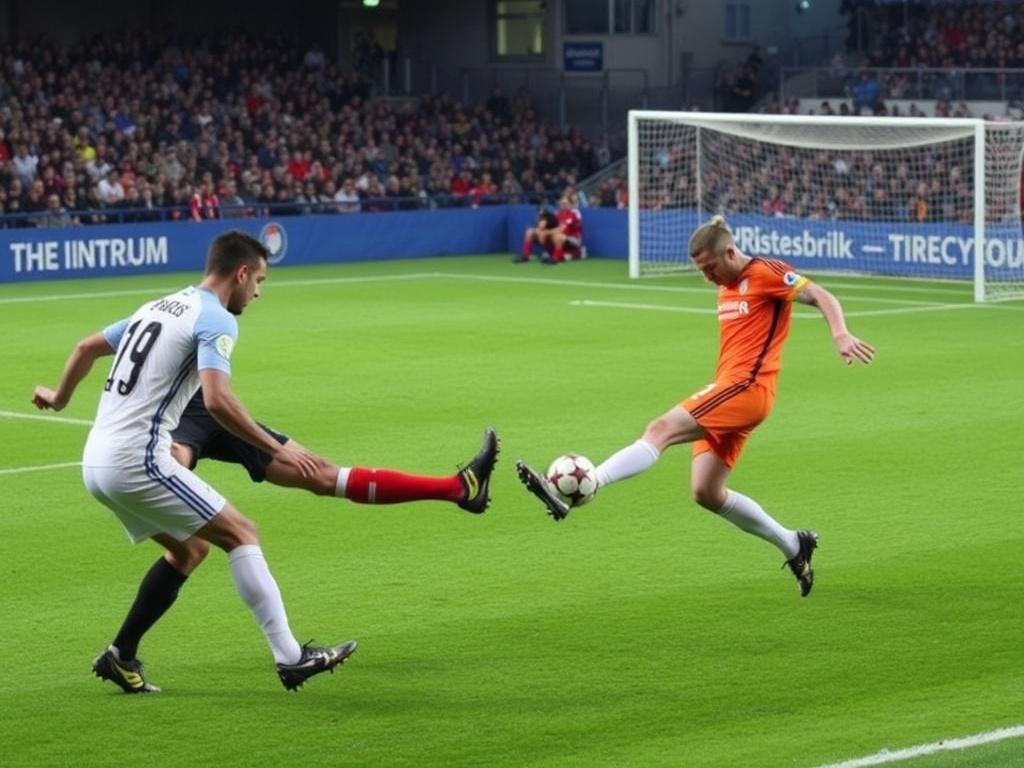
Study the taker’s technique: does he go for curl, dip, power, or a low driven ball? Video review reveals signature moves and tells you whether the player has repeatable patterns. Left-footed curlers often aim for the near post from the right side; right-footed specialists mirror that tendency. Recognizing patterns gives you an edge when interpreting odds in live markets.
Historical conversion rate is a blunt instrument unless paired with context. Look at distance-specific success—how often does the player score from outside the box versus within 25 yards? Also factor in current form; a player with a poor run may still take set pieces but be less likely to convert under pressure.
Routines around free-kicks are telling. Some players walk the ball back, set it, and take a deep breath; others run up quickly. Subtle variations (changing run-up length, altering the stance) can signal a new tactical plan or an attempt to mislead the goalkeeper and wall. Train your eye to spot those cues if you bet in-play.
Using data: sources, metrics, and modeling
High-quality data is the backbone of any repeatable approach. Providers like Opta, StatsBomb, Wyscout, and publicly available sources like FBref and Understat have set-piece event tagging that lets you isolate direct free-kick attempts, their outcomes, and contextual features. For many bettors, a subscription to an analytics provider is a good investment.
Useful metrics include free-kick xG (expected goals from set pieces), shots on target percentage, conversion rates per distance band, and goalkeeper save rates against free kicks. Combining these into a model—logistic regression or machine learning classifiers—can produce a probability estimate you can compare to market odds.
Be mindful of sample size. Free-kick goals are rare events; a single star season can skew results. Use distance and zone aggregation to increase sample sizes, and apply shrinkage techniques (Bayesian priors, weighted averages) to avoid overfitting. Test models across seasons and leagues to ensure robustness.
Building a simple predictive model for direct free-kick goals
You don’t need a PhD to build a useful model. Start with a logistic regression using a few strong predictors: distance to goal, angle, taker identity (binary or a clustered score), goalkeeper free-kick save percentage, and whether the attempt is inside a zone historically associated with goals. Train on multiple seasons, validate out-of-sample, and calibrate probabilities against actual outcomes.
Include interaction terms where they make intuitive sense, such as taker identity × distance. If your taker is a set-piece specialist, that interaction will increase scoring probability at mid-range distances. After the model produces probability estimates, convert those to implied odds and compare with bookmaker prices to identify value.
Log results and review them continuously. I once tracked 120 direct free-kick attempts over a season and found that a small-stakes strategy on mispriced specialist attempts produced a positive ROI after accounting for bookmaker margins. It wasn’t a guaranteed profit machine, but disciplined application of the model protected me from chasing losses and helped me exploit recurring mispricings.
In-play strategies: reacting to the moment
Live free-kick betting is where speed matters. Markets shift quickly after a foul is awarded; the first minute often has the best value before bookmakers and the public settle the price. Pre-positioning accounts and using fast bookmakers helps you capture opportunities in those windows.
Watch the taker’s body language and the referee’s signals. If a team’s usual taker jogs over, the market should reflect a higher likelihood of a direct attempt. Conversely, if a substitute or a defensive midfielder steps up, you should expect lower conversion probability and adjust your stake or take the opposite side.
Cash-out can be useful but dangerous. Sometimes the smart move is to lock a small profit after the first phase of play, especially if the market is volatile and your implied edge was marginal. Other times, holding through the entire sequence offers better expectation, particularly if you have high confidence in the taker.
Examples from matches: reading real moments
I remember a league match where a team awarded a free kick just outside the box late in the game. Their main free-kick taker had been subbed off, and a less polished midfielder approached the set piece. The market still priced it as if the specialist had the ball, so I took a small live position backing no direct goal, which paid off when the attempt was an innocuous cross. That trade relied on watching substitution patterns and not overvaluing team reputation.
In another instance, a player warmed up intensely on the touchline, practicing his curling technique minutes before a halt. He later scored from a free kick, and the pre-game odds were heavily in his favor because few bettors noticed the warmup. Observational edges like that are subtle but repeatable.
Interpreting implied probability and finding value
Convert bookmaker odds into implied probability and subtract the bookmaker margin to get a rough view of true market expectation. If your model or assessment gives a higher probability than the margin-adjusted implied probability, you have value. Keep margin calculations simple: implied probability = 1 / decimal odds; then normalize across outcomes to remove the overround.
True edges in these markets are often small but frequent. Expect single-bet EV to be modest; success compounds with disciplined staking and patience. Avoid chasing high stakes on long-shot free-kick specials; these typically exist to attract bettors and carry heavy juice.
Bankroll and staking: how to size bets for set-piece markets
Because free-kick markets have high variance and discrete outcomes, conservative bankroll management is essential. Flat stakes keep things simple and reduce emotional betting, while proportional staking (e.g., a small percentage of your bankroll) adjusts to your changing funds and ongoing performance.
The Kelly criterion is appealing because it maximizes long-term growth, but it requires precise edge estimates and tolerates large variance. A fractional Kelly (quarter or half Kelly) often delivers a compromise between growth and drawdown risk. For most recreational bettors, sticking to a fixed percentage per stake (1–2% of bankroll) offers a sensible balance.
Record every bet, including contextual notes. Over time, you’ll learn which markets, leagues, and takers deliver repeatable value. That historical record will inform stake size adjustments and help you avoid repeating mistakes that cost money more than necessary.
Using promotions and limits to your advantage
Bookmakers frequently run promotions—enhanced odds, free-bet credits, or refund offers—that can shift the expected value of free-kick bets in your favor. Use these strategically, matching promotions to markets where your model shows value. Always account for the promotion’s terms and staking constraints, as the effective ROI may be lower than it appears on surface odds.
Be aware of account limits and throttling. Sharp, profitable free-kick bettors often find their stakes restricted or accounts flagged. Diversify across reputable bookmakers and consider using smaller stakes across more accounts to avoid hitting limits. Maintaining a consistent, sensible betting pattern helps avoid drawing unnecessary attention to your account.
How referees and fouling tendencies shape markets
Referee style influences both the number and the nature of free kicks awarded. Some referees award soft set pieces in dangerous areas, while others allow play to continue. Tracking referee tendencies—particularly around fouls near the box—helps you anticipate opportunities and avoid crowded markets where the line is already steep.
Team tactical style impacts free-kick frequency and type. Teams that press high or play with width are more likely to concede semi-dangerous free kicks near the penalty area. Conversely, compact defensive teams concede fewer central opportunities and more distance-based set pieces, which are less likely to yield direct shots on target.
Environmental and pitch factors that influence success
Wind direction is crucial. A crosswind can carry curling shots away from the target or add unexpected dip that defeats the wall and keeper. Rain and wet turf reduce friction and can change ball behavior on low-driven efforts. Smaller stadiums with less airflow behave differently than open, coastal venues.
Pitch quality affects spin and bounce. A worn surface near the penalty area can flatten curlers or cause the ball to take an irregular hop. Some groundskeepers prepare the field for set pieces in high-stakes matches, and those micro-conditions are worth observing when you’re assessing fine-grain value on a free-kick market.
Player psychology and momentum
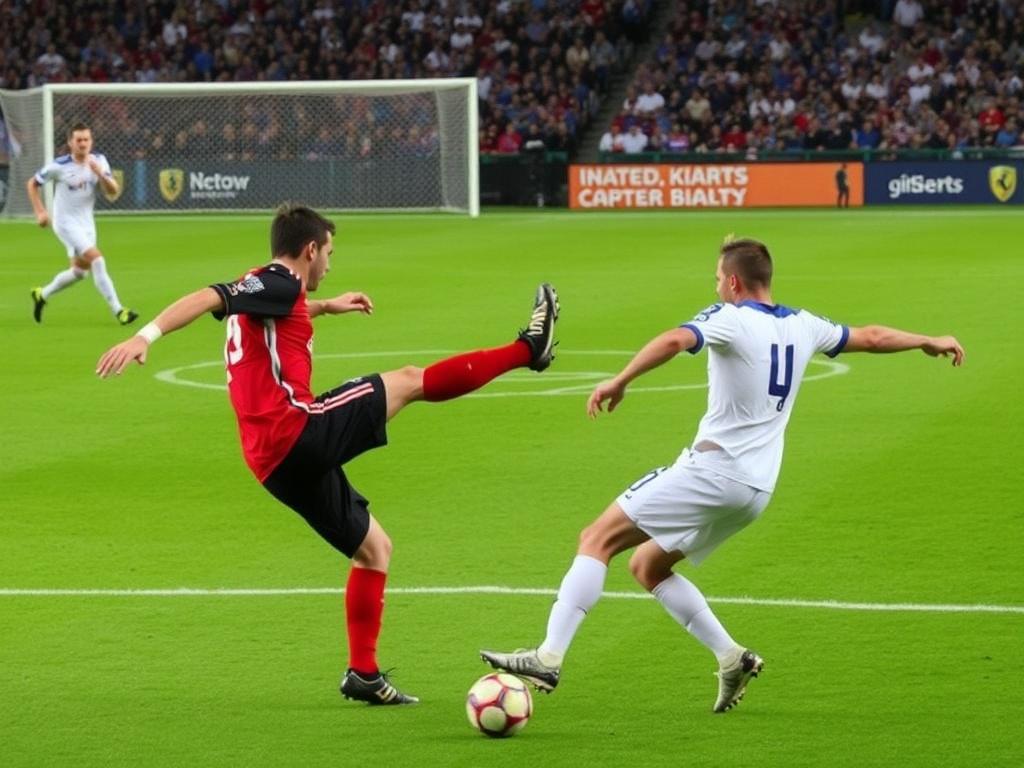
Confidence is not abstract; it shows in run-up speed, facial expressions, and even how a player engages with teammates. Players on scoring streaks often take more risks and attempt ambitious curves; those in scoring droughts may opt for safer, less risky deliveries. Spotting momentum shifts helps in live markets where quick recalibration of probability is necessary.
Pressure situations—late-game, high-stakes matches—affect decision-making. Some free-kick specialists thrive in the heat, others falter. Historical conversion under comparable match pressure is a valuable signal; include it in your assessment if data availability permits.
Specialist supply: how many true free-kick takers exist?
There are fewer true specialists than fans think. Many teams have one designated taker with a handful of occasional deputies. Identifying clubs that back a single reliable set-piece taker is productive because market odds often overreact to team reputation rather than the presence or absence of that taker.
When the specialist is off the pitch or suspended, market prices should compress to reflect lower scoring probability. If the price doesn’t adjust quickly, you have a potential value opportunity by betting against a direct free-kick goal or backing an alternative outcome like “no shot on target.”
When to avoid free-kick markets
Avoid markets where the taker is unknown or where liquidity is low and pricing is erratic. Pre-match markets sometimes misrepresent who will take set pieces, and the first few minutes of a match can reveal the true pecking order. Also steer clear of extreme long-shot specials—these are often loss-leading products meant to excite casual bettors rather than reflect realistic probability.
Large promotional interference or heavy public biases—like backing a superstar on name recognition alone—reduce edge. In those cases, your time is better spent observing and waiting for clearer, less crowded opportunities where data and observation produce a measurable advantage.
Tools to streamline research and execution
Odds-comparison websites, visual event trackers, and alert systems help you spot favorable lines quickly. Set up trackers to flag whenever your model or checklist finds a discrepancy between expected probability and market odds. Speed in execution turns statistical edges into real returns, especially in live markets.
For modelers, automated pipelines that pull event-level data, recalculate probabilities, and push alerts to your phone or desktop are worth building. Even a simple spreadsheet that logs expected probability, bookmaker odds, and stake size will improve discipline and clarity when you’re placing multiple small-value bets each week.
Practical checklist to use before placing a free-kick bet
Adopt a simple, repeatable pre-bet checklist so emotion doesn’t drive your choices. I use a four-point checklist before committing funds: taker identity confirmation, distance and angle verification, keeper and wall behavior scan, and market odds comparison to model probability. If any single item fails, I scale back or skip the bet.
- Confirm taker and any substitutes
- Measure distance and angle relative to historical success zones
- Check goalkeeper tendencies and wall setup
- Compare implied odds to model-derived probability
Using a disciplined checklist reduces impulsive bets and keeps you aligned with long-term edge identification rather than short-lived hunches.
Common mistakes that erode returns
Overvaluing recency is a frequent error: one spectacular free-kick goal can skew your perception of a player’s true ability. Treat single events as data points, not destiny. Aggregate performance and zone-specific metrics tell a truer story than highlight reels.
Another mistake is misreading motive. Teams ahead late may deliberately avoid risky direct attempts, preferring low crosses or short passes. Betting mechanically without considering match context—scoreline, time remaining, or substitution patterns—invites losses. Context is often the decisive variable in these micro-markets.
Regulatory considerations and responsible play
Always check the legal framework where you live before wagering. Different states and countries have varying rules about online betting, including licensing requirements and tax treatments. Betting only where it’s legal protects you and ensures recourse in case of disputes with bookmakers.
Responsible gambling is part of long-term success. Limit your stakes relative to your bankroll, set deposit and loss limits, and take breaks when experiencing emotional volatility. If betting stops being enjoyable or becomes compulsive, reach out to help lines and consider self-exclusion tools offered by major operators.
How to keep improving: learning from wins and losses
Track not just monetary results but the reasoning behind each bet. For every winner, note whether it was a value play or a lucky break. For every loss, determine if it exposed a weakness in your model, an observational blind spot, or a pure variance event. Honest, systematic review accelerates learning more than any number of trial bets.
Attend webinars, follow reliable analysts, and engage with community data projects to broaden your toolkit. Practical knowledge—watching dozens of set-piece sequences and cataloging patterns—compounds faster than passive consumption of tips or hot takes.
Sample odds table: interpreting a typical market
The table below shows a simplified example to illustrate how implied probabilities compare. This is illustrative and not a recommendation to bet specific numbers.
| Market | Decimal odds | Implied probability | Model probability (example) |
|---|---|---|---|
| Direct free-kick to score | 25.00 | 4.0% | 6.0% |
| Shot on target from free-kick | 4.00 | 25.0% | 30.0% |
| Free kick taken by specific player | 1.30 | 76.9% | 80.0% |
In this scenario, the first two rows show potential value: model probabilities exceed implied probabilities. The third row, while seemingly favorable, offers thin edge and low payoff, so staking should be smaller or skipped.
Using substitution and squad news to your advantage
Squad news matters more here than in many other markets. A late substitution, an injury in the warm-up, or a coach’s decision to rest a specialist changes the odds immediately. Monitor team sheets and live feeds in the minutes before match start and during halftime; those brief moments often create the best opportunities.
Pre-match training footage and press conference comments can offer clues about set-piece emphasis. Coaches who publicly highlight set-piece routines are statistically more likely to produce dangerous opportunities, and that emphasis can lift the underlying probability of free-kick success across a match.
Advanced techniques: hedging and correlated markets
Hedging free-kick bets across correlated markets can reduce variance. For example, if you back a specialist to score directly and the market for “shot on target” moves against you late, a small hedge on “no shot on target” in a correlated market may lock a partial profit or limit losses. Hedging requires discipline and must be costed into your edge assessment.
Look for correlated markets where liquidity is higher and the house margin lower. Sometimes the best approach is a combination bet—staking on the taker to have a shot on target combined with a separate hedge on the match outcome if game dynamics change. Complex strategies demand strict rules to avoid emotional overtrading.
How to scale a successful free-kick strategy
Scaling requires balancing concentration and diversification. If your model consistently finds value in a particular league or for a specific taker type, you can increase stakes gradually. However, expect diminishing returns and account restrictions as you grow; bookmakers notice patterns. Spread stakes across multiple markets and accounts to preserve anonymity and liquidity.
Document performance thresholds that trigger stake increases or decreases. For instance, a 3% running ROI over 200 qualifying bets might justify a 10% stake increase, while a 3% drawdown might prompt a pause and review. Hard rules keep subjective excitement from dictating your scaling decisions.
Final notes and next actions
Working free-kick markets successfully blends observation, data, and discipline. They reward bettors who pay attention to detail: taker identity, distance, environmental conditions, and referee tendencies all matter. Small edges compound when applied consistently with sane bankroll control and robust record-keeping.
Start small, build a checklist, and track every bet. Use publicly available data to test your assumptions and, when ready, scale judiciously across reliable bookmakers. With patience and clear-headed analysis, the world of set-piece betting can be a steady source of value rather than a roulette of hope.
