
How to read red cards and shape a smarter betting approach

Red cards change football games in an instant: tactics shift, odds swing, and bettors who understand the signals can find value. Football Betting on Red Cards is a niche that rewards preparation rather than luck, blending match reading, statistical edge, and calm execution. This article walks through the markets, the underlying reasons reds happen, practical strategies for both pre-match and in-play wagers, and how to manage risk without getting swept up by emotion.
Why red cards are more than just a moment
A sending-off is a discrete event, but its consequences cascade across a match. A dismissed player forces a team to reshuffle, often adopting more defensive shapes, changing substitution patterns, and sometimes conceding possession and territory for long stretches.
For bettors, that cascade is what creates opportunities. Odds react to the new probabilities — not perfectly, and not always quickly — which opens the door to finding mispriced options if you know how to anticipate or react to dismissals. The size of the opportunity depends on the market and the timing of the card, with earlier or late-game sending-offs behaving very differently from a wagering perspective.
Understanding why a red occurs is almost as important as the card itself. Some sendings-off follow a pattern: certain referees are stricter, specific players accumulate risky behavior, and match context — derby intensity, refereeing standard, or tournament stakes — raises the likelihood. Learn the pattern and you can begin to forecast not just the event, but its likely impact on odds and market liquidity.
What the red card markets look like
Bookmakers offer a surprising variety of red-card markets. Some are blunt — any red card in the match — while others are more granular, such as player-to-be-sent-off or first/last red card timing. Each market has different liquidity, margins, and susceptibility to late information or in-play adaptation.
Here are the most common market types and what to expect from each:
-
Any red card: a simple yes/no on whether at least one player will be shown a red.
-
Which team will receive a red: splits the same question by side, giving slightly finer odds when one team is more likely to be penalized.
-
Player to be sent off: bet on a named individual, usually with very long odds unless that player is a known hothead.
-
Total red cards over/under: similar to goal markets, but most matches have zero or one red, so these are often binary in practice.
-
Red card timing or first red interval: niche, but useful for experienced in-play traders who can predict when a dismissal is most likely.
Different markets require different approaches. A player-specific market needs strong qualitative insight; a general any-red market leans more on statistical probability and referee tendencies. Liquidity also matters — large books may move slowly on reds, while smaller operators react erratically, creating value or risk depending on your read.
The role of data: reading probabilities instead of intuition
Red cards are relatively rare events, which makes statistical work both necessary and challenging. Because a single season might produce only a handful of reds for a player or ref, you need to combine multiple seasons, leagues, or correlated metrics to estimate probability reliably.
Key datasets include disciplinary records (yellow/red counts per player and team), referee tendencies, foul counts, tackles and interceptions, and context variables like rivalry or knockout stakes. Modern providers such as Opta, StatsBomb, and league-specific feeds offer the raw material to build predictive models, but data alone won’t replace situational judgment.
When building a model, treat red cards as a rare binary outcome and apply techniques suited for imbalanced classes, such as logistic regression with class weighting or tree-based methods tuned for recall and precision. Feature engineering — transforming raw numbers into per-90 metrics, recent form indicators, or heat maps of where contests occur — is often more important than the choice of algorithm.
Practical metrics that correlate with red cards
Not all stats are equally useful. Some proven correlates with dismissals include fouls committed per 90 minutes, yellow card accumulation, duels lost in defensive areas, and frequency of reckless challenges. These variables give you a stronger predictive signal than raw minutes or goals conceded.
Contextual indicators matter too. A player receiving frequent cautions against certain styles of opposition or under specific referees is more likely to cross the line. Similarly, teams that press high and commit more tactical fouls generate more card exposure for both sides of the ball.
Combine these metrics into a composite score or risk index to prioritize matches for deeper review. A simple sortable table of fixtures ranked by risk lets you focus time on the games with the greatest potential for a sending-off, rather than scanning every fixture the same way.
Key indicators every bettor should track
You can’t predict every red, but tracking a handful of variables will substantially improve your edge. The following indicators are both accessible and effective when combined.
-
Referee profile: style, average cards per game, and recent disciplinary decisions.
-
Player disciplinary history: recent yellows, suspensions, and propensity for second-yellow offenses.
-
Match context: derby intensity, knockout implications, or midweek fatigue that increases mistimed tackles.
-
Team playing style: aggressive press, frequent fouling, or tactical fouls to stop counters.
-
Lineup news: key defenders or disciplined midfielders missing can increase chaos.
By layering these signals, you build a probabilistic picture rather than relying on a single red-flag indicator. For example, a high-foul team facing a derby under a strict referee, with a history of late-game disciplinary spikes, is an obvious candidate for further analysis.
Referee tendencies and how to use them
Referees are the single biggest non-player variable in red-card probability. Some officials brand themselves as control-oriented and dole out cards quickly; others prefer progressive escalation and rarely go straight to red. Track their season-to-date cards per 90 and look for patterns across similar fixtures.
But numbers don’t tell the whole story: officials can change approach over time, and a reputation for harshness can influence teams to adapt behaviors. Combining a referee’s historical rate with recent game footage — or even trusted referee reports — helps you judge whether a strict trend is continuing.
Player psychology and on-field temperament
Certain personalities are more prone to reckless decisions, especially when provoked or when fatigue reduces impulse control. Players with an aggressive tackling style or those carrying a history of second-yellow sending-offs deserve extra scrutiny when odds for a player-specific market are offered.
Temperament also responds to match events. A recipient of an early harsh decision may be more likely to retaliate, and players on thin disciplinary margins often misjudge situations late in the game. Spotting those micro-trends as they evolve is what separates reactive from predictive bettors.
Pre-match strategies tailored to red-card markets
Pre-match approaches rely primarily on probability estimation and value spotting before markets incorporate live clues. Your pre-match edge comes from a better assessment of risk than bookmakers and from identifying markets with poor liquidity or slow pricing adjustments.
Start with a shortlist of fixtures where your indicators align: suspect referee, aggressive teams, and contextual catalysts. Then compare your estimated probability to the bookmaker’s implied probability after converting odds. A clear value exists when your model says 15% but the market prices it at 10%.
Pre-match bets are safer when placed on broader markets like any-red card or team-to-have-first-red, as opposed to player-specific bets that require precise predictions. If odds are attractive on a player, ensure your confidence is backed by demonstrable evidence — e.g., repeated past incidents with the same referee or opponent type.
Sizing stakes: a disciplined approach
Because red events are rare and volatile, small, disciplined stakes are essential. Treat red-card bets as a satellite strategy within a broader portfolio of wagers, and allocate only a small percentage of your bankroll to this vertical. That protects you from variance and allows long-term testing of methods.
An ideal staking plan ties unit size to confidence and edge. Use a flat-stake model for exploratory bets and a modest proportional model (e.g., a fraction of bankroll based on edge) once you’ve accumulated a track record. Avoid exponential increases after wins — red-card markets are subject to long losing streaks despite an objective edge.
In-play tactics: reading the game and acting fast
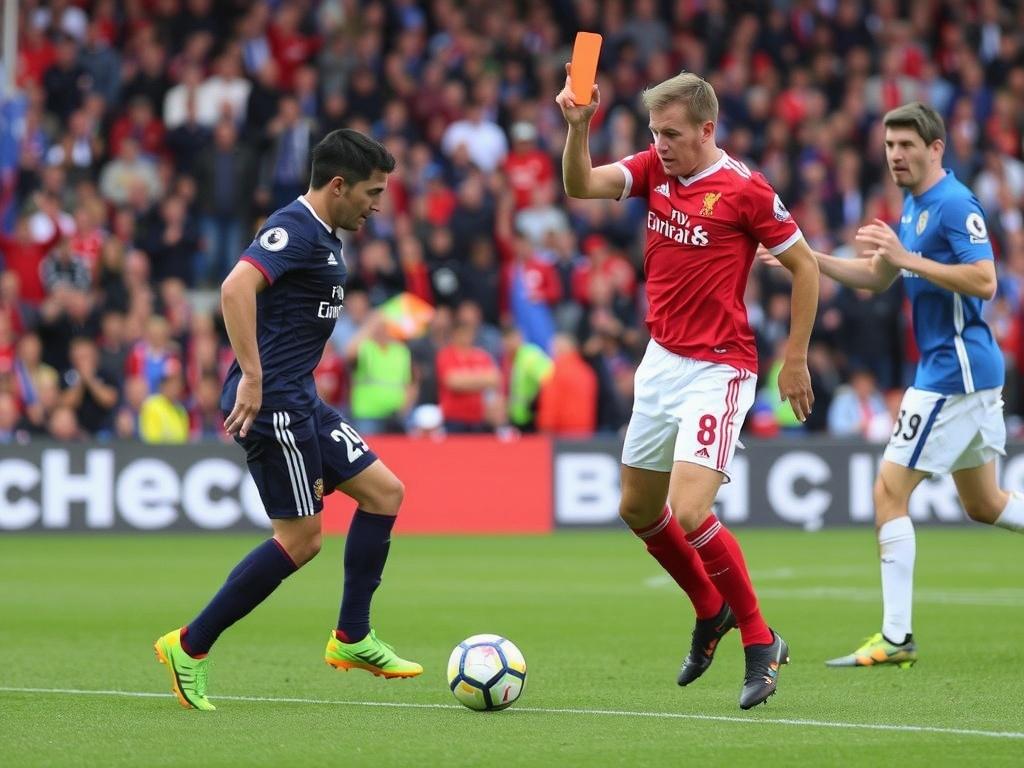
Live markets are where red-card betting often becomes most profitable. A match with early friction, repeated cynical fouls, or rising tempo typically sees market odds move slowly enough to exploit if you’re watching and ready. Timing is critical: markets react faster to visible events like a yellow being booked than to the subtler indicators that a second card is likely.
Look for build-up signs: reckless tackles that narrowly miss a second yellow, players previously cautioned making mistimed challenges, and clinical referees brandishing yellow cards early. If a team has already lost a key disciplinary player to substitution or injury, their vulnerability to further cards can change the match dynamics.
Live cash-out and partial hedge options allow you to lock profit or reduce risk as the game evolves. Be aware that cash-outs tend to incorporate a heavy margin, so use them tactically — for example, to preserve a profitable in-play trade when odds shift against you quickly.
How to spot immediate value after a yellow card
A yellow card changes conditional probabilities for a second yellow or straight red, especially if the player is prone to dangerous tackles. Markets sometimes underreact to that conditional risk. If a player with a history of repeat infractions is booked early, odds for that player or that team to receive a subsequent red can drift more than what the true increase in probability warrants.
Quick comparative checks help: watch how multiple bookmakers adjust and compare implied probability changes. If your model suggests the increase in red probability is underpriced by several percentage points, a small live stake may be justified. Speed and confidence are the key constraints here.
Odds, value, and how markets often misprice red cards
Bookmakers price red-card markets by blending historical frequency with current match context and by factoring in expected liability. Because reds are low-frequency events and often unpredictable, bookmakers apply relatively large margins and conservative probability adjustments. That conservatism is what creates opportunities.
Market inefficiencies crop up for three main reasons: limited information flow, human judgment biases, and liquidity constraints. In-play markets especially can overreact to visible events but underreact to context that’s harder to quantify — such as a referee’s prior interactions with a specific player or team style nuances.
Understanding implied probability is vital. Convert odds to probabilities, subtract the bookmaker margin, and compare to your estimate. When your adjusted probability consistently exceeds the market’s, you’re identifying a value stream. Keep a log of these instances to validate your edge over time.
Bookmaker behavior: limits, suspensions, and market timing
Successful red-card bettors attract attention quickly. Bookmakers will limit accounts, reduce pricing, or suspend markets if they suspect systematic advantage. Expect some friction as your stakes or hit-rate grows, especially on smaller or specialized books.
Use diverse sources: balancing bets across multiple bookmakers reduces the chance of being limited and helps capture the best prices. Larger bookmakers will often be the slowest to move on niche markets, which can be advantageous for small, fast-moving stakes. Exchange platforms offer another route, with peer liquidity and potential for trading positions rather than taking fixed odds.
Timing also matters. Some books are slower to post in-play odds after a contentious incident; others move instantly. Learning which operators lag can give you a brief window to place value bets after a visible trigger, such as an early yellow on a hot-headed player who is likely to commit further offenses.
Tools and resources to build an edge
Information is the real currency in red-card wagering. Subscribing to reputable data providers, tracking referee stats, and using overlays that highlight high-risk fixtures are investments that pay off faster than chasing hot tips. Combine quantitative feeds with selective video review for the best results.
Useful tools include live statistical dashboards that show fouls, tackles, and cards in real time; referee databases that track disciplinary tendencies; and social media or beat reporters who often break lineup news and late injury updates. For those building models, Python or R environments with automated data pulls let you run fast pre-match screens every morning.
There are also specialized services and tipsters focused on disciplinary markets. Treat paid tips as another data source, not a substitute for verification. The best bettors cross-check claims with raw data and their own indicators before committing stake.
Table: common red-card markets and quick tips
| Market | Description | Quick tip |
|---|---|---|
| Any red card | Yes/No on whether at least one red will occur. | Use when multiple risk signals align; easier to model than player-specific outcomes. |
| Which team gets the red | Predict which side will suffer a sending-off. | Good when one team is aggressive or a key aggressive player is starting. |
| Player to be sent off | Bet on a named player being dismissed. | Only bet with strong evidence: recent yellows, temperament, and referee interaction. |
| Total red cards O/U | Over/under a set number of reds, typically 0.5 or 1.5. | 0.5 markets are binary; use when you expect at least one dismissal with confidence. |
| Timing of first red | Short intervals predicting when the first sending-off will take place. | Requires live trading ability and a clear read on match tempo. |
Case studies: what real matches taught me
Early in my experience betting specialty markets I backed a player-specific sending-off based on a referee who issued three reds in his previous four matches. The book offered odds that implied a lower likelihood than my combined referee-player model suggested, so I placed a measured stake and won. The lesson was simple: combine referee and player signals rather than treat them in isolation.
Another time I took a small in-play position on any-red after an intense first half with multiple heavy challenges and two early yellow cards. The market barely moved, and a second yellow in the 58th minute landed my bet. That trade underscored the value of watching match flow instead of relying solely on pre-match statistics.
I also learned the hard way when overconfidently betting a high stake on a derby expecting reckless behavior. The referee managed the game tightly, and my stake was trimmed by a rapid run of matches where my indicators were outweighed by the official’s control. Humility is a practical skill for long-term success.
Common mistakes and how to avoid them

Overreacting to recent events is the most frequent error. One dramatic sending-off can skew your perception of red frequency if you fail to normalize by population size and context. Always anchor on broader data and avoid letting a vivid single instance rewrite your priors.
Another mistake is chasing losses in live markets. The adrenaline of a near-miss can lead to oversized stakes in the heat of the moment, eroding bankroll discipline. Set clear staking rules before a game and use smaller, defined units for in-play activity to avoid emotional overreach.
Finally, misreading lineup and substitution patterns causes misplaced bets. A defensive reshuffle after a first-half booking may reduce the chance of further cards, not increase it. Read match signals carefully and anticipate tactical changes rather than assuming escalation will always follow a yellow.
Legal, ethical, and responsible gambling considerations
Before engaging in disciplinary markets, ensure betting on them is legal in your jurisdiction and that you use licensed bookmakers. Regulations differ by country and sometimes by state, and some operators restrict certain markets in specific areas. Compliance is non-negotiable.
Responsible gambling practices are especially important with rare-event markets because they often encourage impulse wagers after dramatic match moments. Set bankroll limits, use pre-committed staking plans, and avoid putting essential funds at risk. If betting becomes stressful or compulsive, seek professional help and utilize bookmaker self-exclusion tools where available.
Respect the integrity of the sport. Never act on or solicit inside information about potential disciplinary actions from players, referees, or team staff. Betting responsibly includes keeping things aboveboard; crossing that line risks legal and ethical consequences and harms both you and the industry.
Bringing it together: a practical workflow
Develop a repeatable pre-match checklist: scan referee stats, validate player disciplinary histories, check team styles and expected lineups, and finally run a quick odds comparison across bookmakers. That checklist reduces emotional decisions and focuses your time on the highest-probability opportunities.
For in-play trades, prepare an observation routine: note early cautions, tempo changes, substitutions that affect discipline risk, and any refereeing idiosyncrasy that appears during the match. Speed matters but avoid rash moves; prioritize clarity over hurried reaction.
Maintain a disciplined log of bets and outcomes. Track market, stake, odds, rationale, and post-mortem notes. Over time, this dataset will reveal where your model performs well and where your intuition needs recalibration, allowing incremental improvement rather than guesswork.
Practical tips to get started
Start small and focus on learning. Use micro-stakes or demo accounts if available and prioritize consistency over early wins. The rarer the event, the longer the observation period you need to assess whether your edge is real.
Use exchanges for trading before committing to bookmakers: exchanges allow you to lay positions or trade out with lower counterparty risk. Combine this with selective bookmaker positions to capture the most favorable odds when they arise.
Finally, build a narrow specialization. Covering every league and every referee dilutes your edge. Concentrate on a few leagues or referees where you can develop deep, repeatable insights and then expand as you build a track record and tools.
Red-card wagering sits at the intersection of sharp match-reading and disciplined money management. It rewards patience, preparation, and a mindset that values small, repeatable edges over dramatic plays. With careful tracking of referees, players, and context, and with strict bankroll rules, this niche can become a reliable part of a diversified betting approach.
