
A practical guide to football betting markets


Betting on football can feel like stepping into a crowded market where every stall shouts different prices and promises. This article—Football Betting Markets Explained—walks you through the main markets, the logic behind the odds, and the practical habits that separate guessing from informed wagering.
What betting markets are and how they function
At its core, a betting market is a place where odds are offered on a specific outcome, and those odds reflect the implied probability plus the bookmaker’s margin. For football, markets cover everything from the final result to tiny in-play events like the next corner or the minute a goal is scored.
Bookmakers set prices using models and expert judgment, then adjust them as money flows in and news arrives. That adjustment process — often driven by both quantitative models and bettor behavior — is what creates trading opportunities for observant punters.
Understanding markets means knowing the participants: bookmakers, exchanges, professional traders, casual bettors, and syndicates. Each group interacts and moves prices; recognizing who is influencing a market can help you interpret odds shifts and spot potential value.
Basic types of odds and reading implied probability
Odds are the language of markets. The three common formats you’ll see are decimal, fractional, and American; they communicate the same idea in different ways and convert into an implied probability. Converting odds to probability is crucial for identifying when a price looks generous compared to your own estimate.
Decimal odds are widespread in many places because they’re straightforward: stake multiplied by the decimal gives total return. Fractional odds still appear in traditional settings, and American odds are common in US-facing sportsbooks, showing how much you win on a $100 stake or how much you must stake to win $100.
Below is a quick conversion table to use as a reference when switching between formats and when converting odds into implied percentages.
| Decimal | Fractional | American | Implied probability |
|---|---|---|---|
| 1.50 | 1/2 | -200 | 66.67% |
| 2.00 | 1/1 | +100 | 50.00% |
| 3.25 | 9/4 | +225 | 30.77% |
| 5.00 | 4/1 | +400 | 20.00% |
Match result markets: 1X2, double chance, and draw no bet
The 1X2 market is the simplest and most familiar: home win, draw, or away win. It’s the starting point for most casual bettors and for many betting shops’ promotional offers. Because there are three outcomes, odds are usually longer compared to head-to-head bets that eliminate the draw.
Double chance lets you cover two of the three results — for example, home win or draw — and offers lower odds but higher probability of success. Draw no bet removes the draw and returns your stake if the match ends level, trading away some payout for reduced risk.
These markets are the backbone of many betting strategies: you can combine them with handicaps or totals, or use them as a baseline to compare implied probabilities across different bookmakers. Personally, I use 1X2 early in the week as a read on the general price before diving into more refined markets closer to kick-off.
Handicap markets: leveling the playing field
Handicap bets shift a notional advantage to one side to make markets more competitive. European handicap is straightforward — you give or take whole goals — while Asian handicap slices the market more finely with quarter and half-goal lines. That precision changes how results are settled and can create safer betting options.
Asian handicaps are popular because they can effectively eliminate the draw, and some lines provide partial wins or refunds on ties. For example, a -0.5 Asian handicap requires the favored team to win, while -1.5 requires victory by two or more goals; the subtleties in between can be powerful for hedging risk.
I remember a game where a top team was priced at -1.5 at kickoff and -2.0 by halftime after heavy betting on the favorite. Reading that movement as the market responding to inside information or status updates allowed me to trade out profitably before the final whistle.
Totals and over/under markets
Totals, commonly called over/under markets, let you bet on the number of goals in a match rather than who wins. Bookmakers offer lines such as 2.5, 3, or 3.5 goals. Over/under 2.5 is especially popular: over means three or more goals are scored, under means two or fewer.
These markets are driven by stylistic matchups and situational factors. A clash between two defensive teams often produces attractive under prices, while games featuring free-scoring sides or poor defenses tend to skew towards the over. Weather, injuries, and tactical setups can tip the balance significantly.
For market-savvy bettors, comparing expected goals (xG) models with the market total can reveal opportunities. If your model gives a 2.1-goal expectation but the market implies 2.7, there may be value on the under — provided you trust your inputs and account for variance.
Both teams to score and goal-related markets
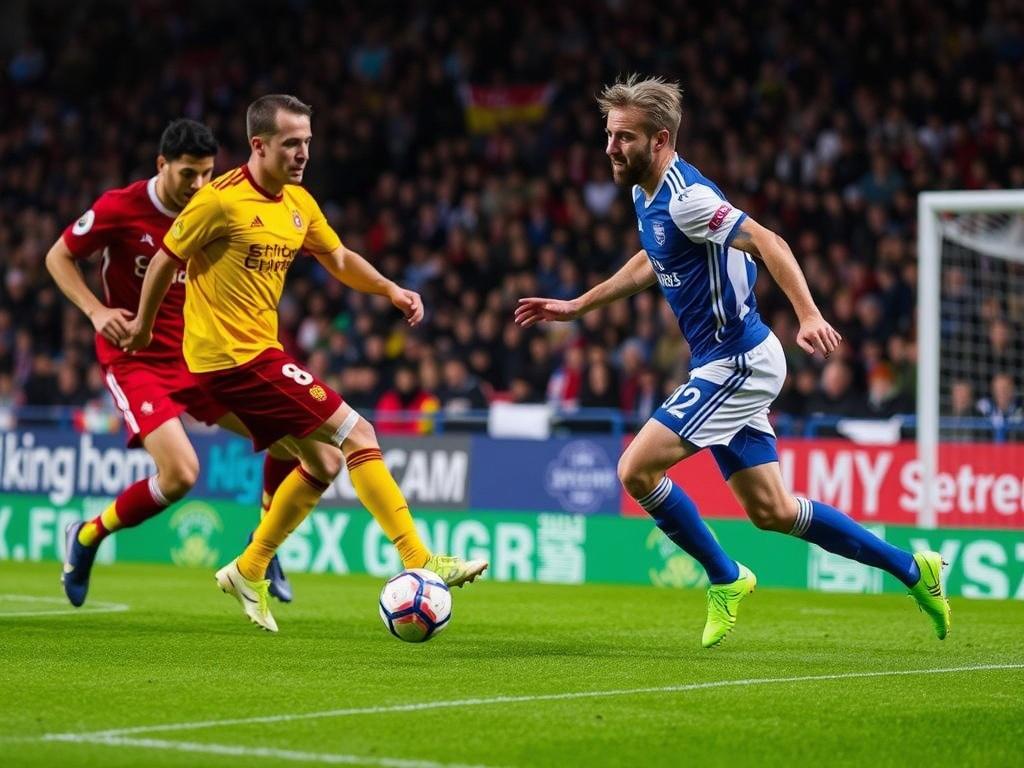
Both teams to score (BTTS) is a simple yes/no market: do both sides find the net during 90 minutes? It’s popular because it ignores the final winner and narrows the bet down to attacking outcomes. BTTS odds respond quickly to lineup news and early match events, like an early red card that changes the match dynamic.
There are variations, such as BTTS and over 2.5 or BTTS first half, that layer conditions onto the basic idea. Bookmakers also offer goal-range markets, such as total goals between 2 and 4, letting you target more nuanced expectations than the binary over/under provides.
In several seasons I tracked BTTS trends across a league and found that some promoted teams were much more likely to concede, making BTTS Yes a consistent overlay for value when priced against my model. The key is not to treat BTTS as a one-size-fits-all market but to analyze match context.
Correct score, first goalscorer, and special player props
Correct score markets pay well but are very hard to predict because of the large number of possible outcomes. They attract people who enjoy big returns from small stakes and bettors who feel confident about defensive setups. Hedging with partial bets on totals or half-time results can improve expected returns in selective cases.
First goalscorer and anytime goalscorer markets isolate individual events and are heavily affected by team selection. Betting on a striker to score in a game is sensible only when you know they’ll start, they are in good form, and the opposition’s defense plays into their strengths. Substitutions and red cards make these markets volatile.
Special props cover everything from who wins the first corner to whether a player will hit a yellow card. These micro-markets are fertile ground for bettors with niche knowledge — for example, a scout’s insight into a defender’s tackling style could translate to an edge in cards markets.
Outrights and futures: season-long markets
Outright markets let you bet on long-term outcomes, such as league winners, relegation, or top scorer. These bets lock in prices months before they resolve, so they’re influenced by transfers, managerial changes, and form cycles. Futures can be a great way to exploit early-season optimism or overreaction to a few results.
The downside is that funds are tied up for long periods, and volatility is high. Many bettors use multiples or small stakes across several futures to diversify exposure. Watching how odds shorten or lengthen after a single result can signal where the market believes momentum or structural strength lies.
One season I backed a mid-table team at generous odds to finish in the top four after a smart January transfer; the price moved quickly when they won a couple of important fixtures. Small, well-timed outright stakes can morph into significant profits if the story holds.
Accumulators and multiples: combining odds
Accumulators (parlays in some regions) combine multiple selections into a single bet where all parts must win for you to collect. The appeal is obvious: small stakes can transform into large payouts. The risk, of course, multiplies with each leg you add because one upset spoils the entire bet.
Understanding how odds multiply is simple but essential: decimal odds are multiplied across legs to yield the total price, and the implied probability falls quickly as you add more outcomes. Many experienced bettors treat accumulators as entertainment rather than a reliable profit method unless they can add clear-value legs.
Here are practical rules I use when constructing multiples: limit legs to three or four max, avoid redundant selections that depend on the same outcome, and size stakes conservatively. This approach preserves fun without wrecking a bankroll on longshot parlays.
In-play (live) betting dynamics and strategies
Live betting transforms a static market into a fast-moving environment where prices reflect real-time events. Momentum, substitutions, injuries, and referee decisions all stir the odds, offering both risk and opportunity. Traders often profit by predicting how a game will unfold in the next 5–20 minutes rather than the final outcome.
Successful in-play betting requires discipline and fast decision-making. You’ll need clear criteria for entering and exiting trades, and sensible tools like quick cash-out options or exchange lay bets to hedge. Avoid overreacting to a single shot or momentary pressure; composite events and expected goals provide a better lens for short-term forecasting.
My most reliable live strategy has been following xG timelines: when a team dominates and accumulates high xG without scoring, the market often overreacts toward the other side, creating lay or back opportunities on the dominant team. Timing and patience are everything here.
Betting exchanges versus traditional bookmakers
Betting exchanges match bettors against each other rather than against a bookmaker, letting users both back (bet for) and lay (bet against) selections. Exchanges generally offer better prices due to lower margins, but they can be less liquid, especially on niche markets or low-profile matches.
Traditional bookies provide convenience, promotions, and sometimes higher limits on mainstream markets. Exchanges reward active traders who want to take advantage of small price differentials, while sportsbooks often focus on retail business and secondary bets. Both have roles depending on your strategy and tolerance for complexity.
I began using exchanges to lock in profits during volatile matches and still use bookmakers for straightforward pre-match bets and promotions. Combining both platforms gives flexibility: use the best prices available and don’t let loyalty to a single provider blind you to better value elsewhere.
Understanding margin, vigorish, and overround
Bookmakers build a profit margin into their prices to ensure they make money regardless of outcome distribution. This margin — called vigorish, juice, or overround — means the implied probabilities of all outcomes sum to more than 100 percent. Recognizing margin size helps you compare true market value across sites.
For example, a tight market with a low overround is friendlier to bettors, while a high overround signals less attractive prices. Comparing multiple bookmakers and using exchanges can expose where the market is most efficient and where opportunities exist to exploit softer lines.
When I shop for prices across six or seven bookmakers before placing a bet, the differences in margin often determine which site I use. A small improvement in odds across many bets compounds into a significant advantage over time.
Finding value: model building and expected value
Value betting means identifying when the market price is worse than the probability you estimate. To do this consistently, you need a model — even a simple one — that generates expected probabilities for outcomes. The model doesn’t have to be perfect; it needs to be better than human guesswork and the market consensus at scale.
Many effective models start with team strength ratings, goal expectancy, and home advantage adjustments, then incorporate situational variables like fatigue and injuries. Testing and backtesting are essential: never deploy a model without sufficient historical performance data and a clear understanding of variance and drawdowns.
I built my first model in a spreadsheet, using goals per match and home/away splits as primary inputs. It wasn’t sophisticated, but it consistently identified a few value bets each week, and that consistency allowed me to refine the model and scale my staking plan cautiously.
Arbitrage, matched betting, and spotting inefficiencies
Arbitrage involves placing bets on all possible outcomes across different bookmakers so that, regardless of the result, you lock in a profit. True arbitrage opportunities are rare and short-lived because markets are efficient and bookmakers close or limit accounts that exploit them aggressively.
Matched betting — using bookmaker promotions and free bets to create near-risk-free profit — is a more attainable approach for many. It requires careful execution and thorough tracking, but it’s legal and often profitable for newcomers who want initial bankroll growth without sophisticated models.
Both techniques teach valuable skills: odds comparison, rapid execution, and understanding limits and terms. I used matched betting early on to seed my bankroll while I developed my longer-term strategies and learned to read market movement more clearly.
Bankroll management and psychology

Even the best market analysis fails without sound bankroll management. Decide on a staking method — fixed stakes, unit staking, or Kelly criterion — and stick to it. The goal is to survive losing streaks and preserve capital so that your edge can play out over many bets.
Psychology matters as much as math. Avoid chasing losses, reduce stake size during emotional states, and treat each bet as a single trial in a long sequence. I’ve seen talented analysts blow accounts through overconfidence and impatience; the discipline to step back is often the difference between a hobbyist and a professional approach.
- Set a clear, separate bankroll for betting and never finance wagers from essentials.
- Measure bet size as a percentage of bankroll and be ready to scale stakes down after drawdowns.
- Keep records of every wager — result, stake, odds, and rationale — and review monthly.
Legal and regulatory considerations
Where you live determines what you can bet on and which providers are available. Licensed operators must follow local rules, including identity verification and responsible gambling protocols. Using regulated sites protects you from fraud and provides recourse in disputes, albeit sometimes at the cost of slower account verification processes.
Taxation on winnings varies dramatically. In some jurisdictions, casual bettors pay no tax while professional traders do, and in others, operators withhold taxes at source. Always check local law and consider consulting a tax professional if your activity becomes substantial.
I once had to forfeit a bonus because I missed a bookie’s wagering terms that were specific to a jurisdiction. The lesson was clear: read the small print, and when in doubt, prioritize regulated, transparent operators even if odds are slightly worse.
Common mistakes to avoid
A few recurring mistakes account for a large share of preventable losses: betting on gut feelings without data, ignoring bankroll rules, and failing to account for bookmaker margin. Avoiding these errors elevates your long-term results more than chasing exotic strategies.
Other pitfalls include overloading on promotional bets without considering their expected value, doubling stakes after losses, and letting short-term variance dictate strategy changes. These behaviors are seductive because they offer quick fixes, but they erode long-term growth.
My practical rule is simple: if a bet isn’t backed by a clear reason (a model signal, a tactical insight, or a strong statistical edge), I write it down in a “why not” column and often skip it. That extra second of discipline reduces impulsive mistakes substantially.
How to read market movement and interpret news
Odds move for two primary reasons: fresh information (lineups, injuries, weather) and money flow from bettors. Learning to differentiate between the two is essential. A price change after a key player’s injury is informative; the same change after heavy money on one side may indicate public behavior rather than underlying value.
Monitoring multiple bookmakers and exchanges helps you see where money is coming in. Sharp, professional bettors often move exchange prices first; following that movement — while considering context — can be informative but risky if you imitate without understanding their reasoning.
I track a few trusted tipsters and combine their market moves with my model’s output. If both align, I’ll take a position; if they diverge, I treat the discrepancy as a red flag that warrants more research rather than immediate action.
Tools and resources to follow markets
Several tools make market navigation easier: odds comparison pages, exchange market depth charts, expected goals models, and lineup aggregators. Use these resources to cross-check information rather than as a substitute for your own judgment.
Useful resources include: live odds comparison sites, reputable xG providers, and apps that aggregate team news and lineups. A small toolkit tailored to your betting style is more effective than a dozen half-used subscriptions.
- Odds comparison websites for price shopping and spotting arbitrage.
- Data services offering xG and shot maps for match quality analysis.
- Lineup and injury trackers to catch last-minute changes that swing markets.
Putting it together: building a simple, robust betting plan
Start with a clear objective: are you betting for entertainment, slow bankroll growth, or to become a professional trader? Your objective dictates your tolerance for risk, stake sizes, and which markets you’ll focus on. Clarity here keeps day-to-day decisions aligned with long-term goals.
Next, choose a few markets where you can realistically find an edge: perhaps totals and Asian handicaps, or BTTS and first goalscorer. Build a lightweight model or checklist, backtest it on historical data, and set rules for stakes and maximum exposure per event. Simplicity often outperforms complexity.
Finally, keep detailed records and review them regularly. Measure metrics like return on investment (ROI), hit rate, average odds, and maximum drawdown. Over months and seasons, those statistics will tell you whether the plan is working and where adjustments are necessary.
Markets will change, and so should your approach. Stay curious, be disciplined, and treat betting as a skill that improves with feedback, not a scheme that promises instant success. With patience and structured methods, football betting markets become less mystifying and more manageable — a marketplace where informed decisions, rather than luck alone, determine outcomes.
